


Construction of the world's largest fully automated terminal is in full swing
Source:
2026-07-27
Singapore is advancing one of the largest maritime engineering projects in the world—the Tuas Port development, which is set to become the world’s largest fully automated container terminal. When fully completed, it will cover an area of 1,337 hectares, equivalent to about 3,300 standard football pitches, with 66 berths and an annual handling capacity of 65 million twenty-foot equivalent units (TEUs).
At the heart of the project is a giant sea wall, designed to protect and stabilise the reclaimed land on which the new port is built. Engineers are installing hundreds of giant concrete structures on the seabed to form this protective barrier. Each concrete unit is roughly the height of a ten-storey building. When joined together, these components create a containment wall that encloses and reinforces the sea area needed for Singapore’s next-generation port infrastructure.
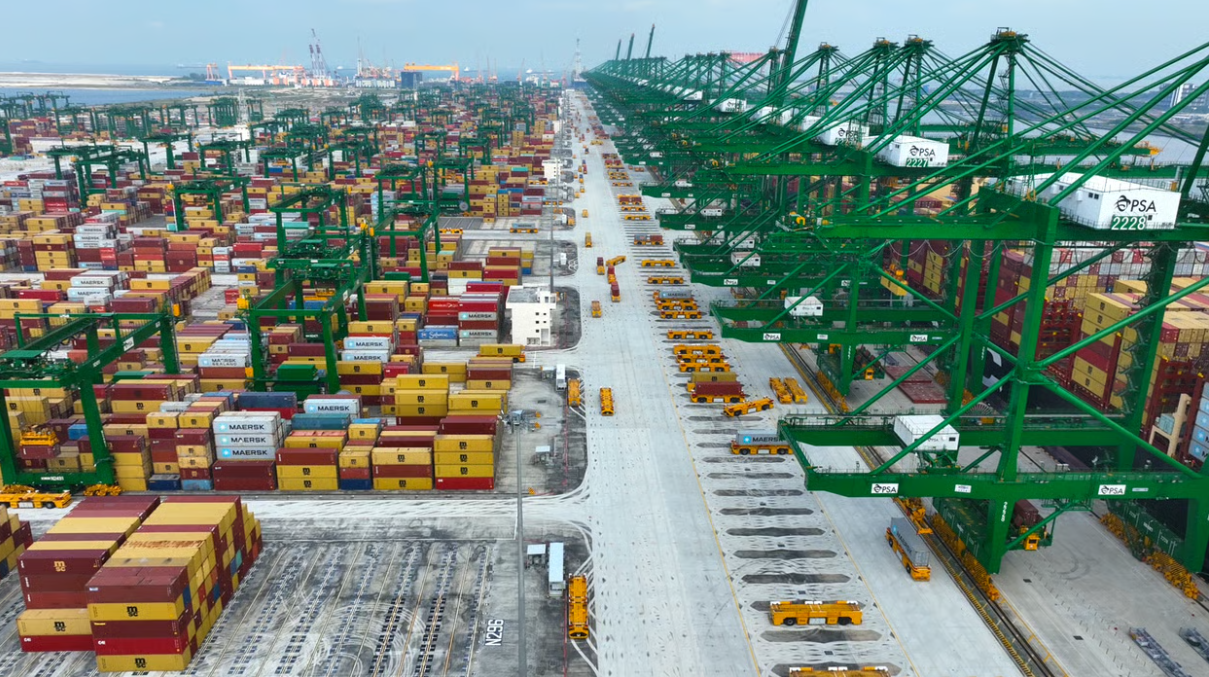
The massive undertaking is being carried out by PSA Singapore, a wholly owned subsidiary of PSA International, which manages an extensive network of ports and supply chain operations across 45 countries worldwide.
Since 2012, PSA Singapore has been working closely with multiple government agencies to plan, design and construct every inch of Tuas Port. Anticipating future land constraints, the group first launched a six-year land reclamation project. More than 50% of the fill material used came from dredged materials and excavated earth, reflecting PSA Singapore’s commitment to building a green and sustainable port for the city-state.
A technology-first port
Tuas Port has become a testbed for cutting-edge innovation, automation and digital transformation, laying a solid foundation for PSA Singapore to eventually extend its operating blueprint to its global network.
Beyond transformative infrastructure, Tuas Port’s fully automated operations are making a profound impact through the seamless integration of agentic AI and digital technologies. “Everything will run as a single integrated system,” said Liang Hui Tan, Vice President of Tuas Development, Strategic Port Technology, Solutions and Services at PSA Singapore.
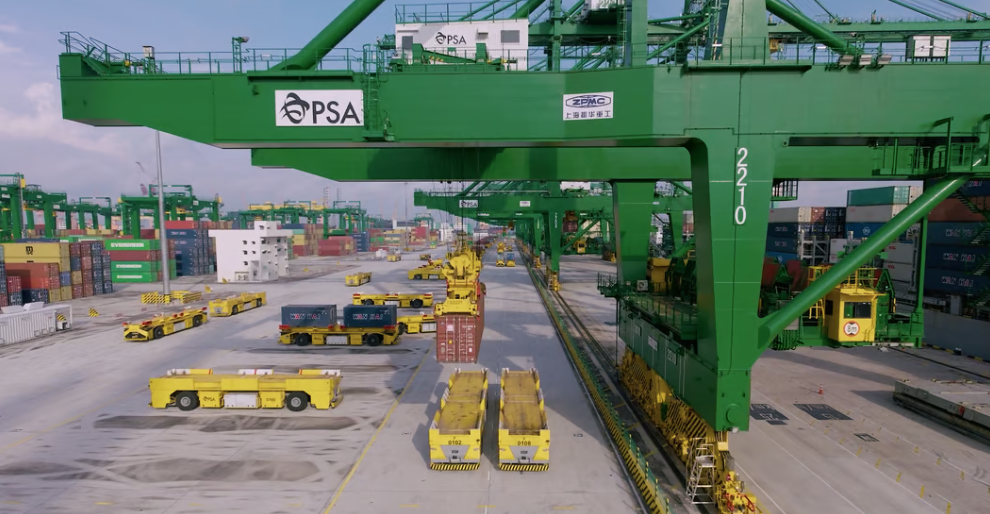
“Fully automated yard cranes, unmanned automated guided vehicles, and remotely operated quay cranes will collectively enhance our operational efficiency, workforce productivity and safety.” In particular, 5G‑enabled automated guided vehicles play a vital role in the fully automated port—they can operate around the clock, efficiently moving containers between the wharf and the yard.
Another key element of Tuas Port’s bold and pioneering design is its event‑driven architecture. This enables interconnected systems, equipment and processes to exchange event‑based information in real time at scale—such as vessel arrivals, container movements and equipment status changes. By building a comprehensive and complete “event mesh,” the port can achieve real‑time data processing, agile decision‑making and greater resilience, ensuring smooth information flows even during temporary disconnections or data surges. This ground‑breaking application optimises resource allocation, enables proactive decision‑making, and thus boosts overall productivity and operational performance.
On the sustainability front, PSA Singapore’s overarching goal is to achieve net‑zero emissions by 2050. In addition to constructing ultra‑low‑energy buildings and deploying solar photovoltaic panels, Tuas Port employs a smart grid management system that monitors and schedules energy demand and supply in real time. The system can forecast electricity consumption, help smooth peak‑load fluctuations and optimise energy distribution. Furthermore, electric automated guided vehicles equipped with fast‑charging battery systems reduce carbon emissions by about 50% compared with existing diesel‑powered tractor units, further strengthening the port’s green and low‑carbon profile.
A cornerstone of Singapore’s western economic engine
A key factor in the port’s success lies in its unique location. Tuas Port sits adjacent to western industrial precincts such as the Jurong Innovation District, enabling upstream and downstream industries and related sectors to leverage the port’s global connectivity for faster turnaround times and more reliable logistics links. “This helps unlock supply chain synergies, optimise trade flows, and enhance end‑to‑end visibility,” said Tan.
Tuas Port will become what Singapore Prime Minister Lawrence Wong has described as the country’s “future western corridor”—a vital anchor for the city‑state’s manufacturing, services and innovation ecosystem.
In a global landscape marked by trade friction and uncertainty, PSA Singapore’s forward‑looking design and advanced technology at Tuas Port provide two pillars—stability and reliability—that are especially valuable in today’s business environment.
“Tuas Port is not just an infrastructure project,” Tan said. “It is a long‑term strategic investment by Singapore to enhance national competitiveness, strengthen economic resilience, and bolster our ability to navigate the complexities and challenges of global supply chains.”
Hot News