


Shipowners who pay transit fees to Iran may face immediate termination of their vessel insurance!
Source:
2026-07-27
Surge in Attacks Drives War Risk Insurance Rates to Record Highs in Key Middle East Chokepoints
Recently, there has been a significant increase in attacks on commercial vessels in two of the Middle East's key waterways—the Strait of Hormuz and the Bab el-Mandeb. War risk insurance premiums for the Strait of Hormuz have surged to their highest levels since the onset of the crisis. Meanwhile, in the Red Sea, following the Houthi announcement of a maritime blockade on Saudi Arabia, rates for some routes surged by as much as 150% in a single day.
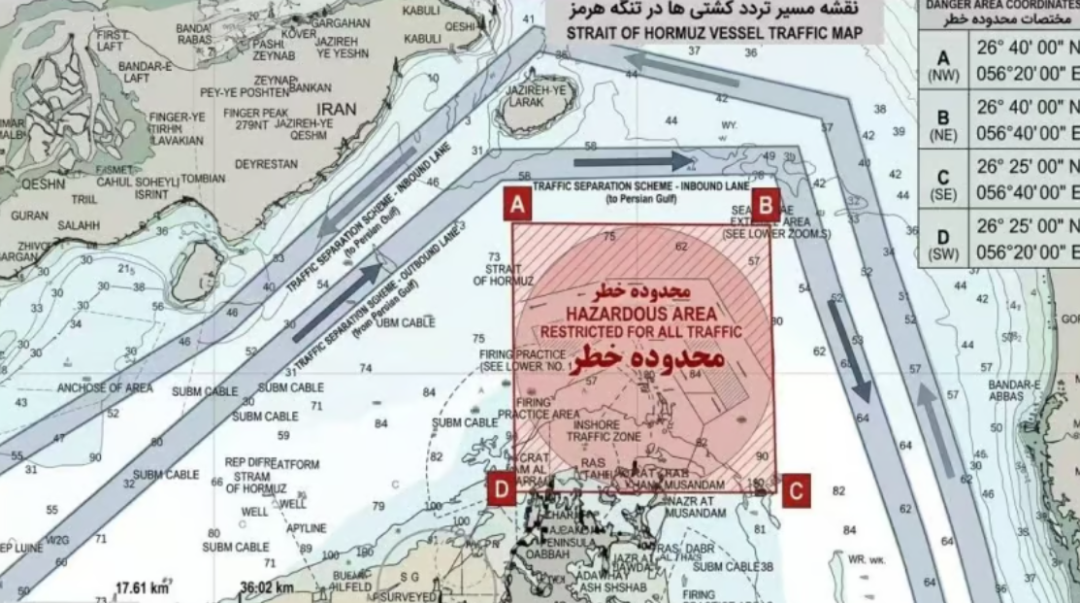
According to Marcus Baker, Global Head of Marine at insurance brokerage giant Marsh, current rates have climbed back to between 2% and 6% of the vessel's hull value, compared to less than 1% before the crisis. Reuters, citing market sources, reported that rates have risen to between 8% and 10% of hull value.
For example, for an oil tanker valued at $100 million, a 6% premium would mean a single transit would cost $6 million. Baker described the current market as a "rollercoaster" and warned that rates are "unlikely to come down unless the market truly believes the risk environment has changed."
This cost increase is having a tangible impact on trade flows. Data from S&P Global Commodity Insights shows that on July 21, only 10 transits were recorded through the Strait of Hormuz, down from 16 the previous day. Before the outbreak of the US-Iran conflict, the daily average was approximately 120 to 140 transits—a decrease of 92%–94%.
An analysis by shipbroker BRS points out that product tankers have a much weaker capacity to absorb premium increases than crude oil tankers, as their freight rates have seen relatively limited increases during the conflict, making it difficult to absorb high insurance costs. S&P Global data shows that Persian Gulf product exports fell to 1 million barrels per day (bpd) in May, down 76% from 4.1 million bpd in 2025; crude oil exports plummeted from 17.5 million bpd to 3.8 million bpd, a drop of 78%.
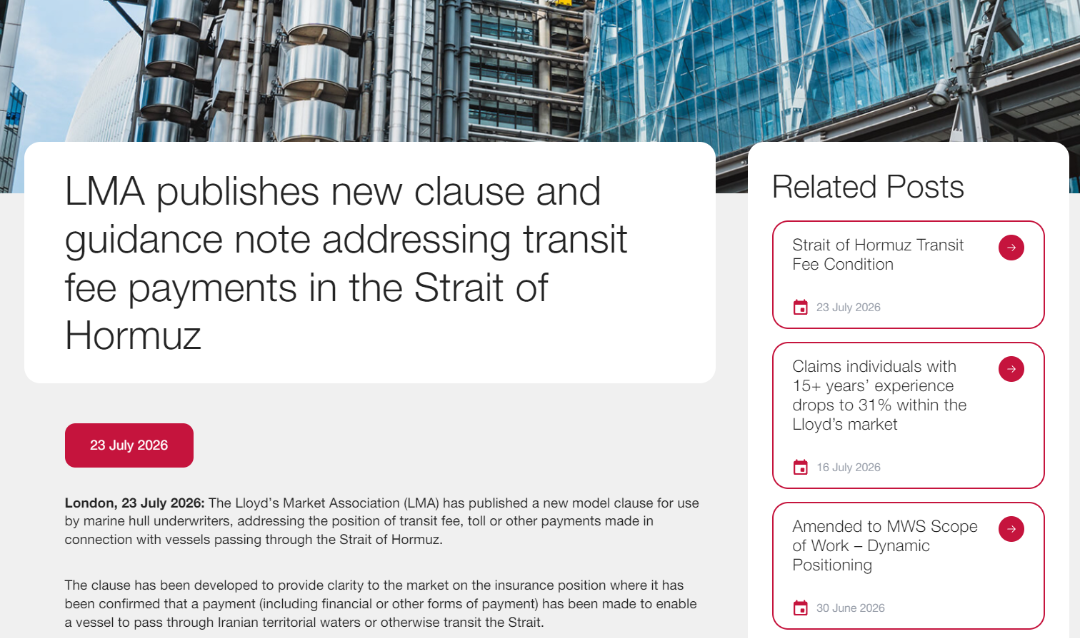
Alongside surging insurance costs, shipowners are also facing new compliance risks. On July 23, the Lloyd's Market Association (LMA) issued a new standard clause explicitly granting insurers the right to immediately cancel all insurance coverage for a vessel if it is found that the shipowner has made any form of payment—including transit fees, tolls, or other charges—to Iranian parties in order to pass through the Strait of Hormuz. Arabella Ramage, LMA's Director of Legal and Regulatory Affairs, stated that the clause is designed to "provide insurers and assureds with a clear contractual position" in response to a "complex and evolving legal and regulatory environment." Under the clause, coverage termination is effective immediately upon confirmation of such payment, with no grace period—because such payments could violate US, UK, or EU sanctions and counter-terrorism laws.
The introduction of this clause places shipowners in a dilemma between financial costs and compliance risks: refusing to pay may expose them to physical threats, while paying could result in the loss of their insurance safety net.
Beyond the Strait of Hormuz, the situation in the Red Sea has also deteriorated sharply. On July 20, Yemen's Houthi movement announced a maritime blockade on Saudi Arabia. In the following days, two Saudi oil tankers were attacked by the Houthis.
According to market sources cited by Reuters, indicative war risk rates for the Bab el-Mandeb have jumped from approximately 0.3% before the blockade announcement to 0.75%, a 150% increase. By July 23, rates for some routes had exceeded 1%, while vessels calling at southern Saudi ports or those with Saudi affiliations were quoted rates as high as 3%. By contrast, risks for ports in northern Red Sea Saudi ports such as Jeddah and Yanbu are relatively lower, with rates around 0.1%. Hamish Kinnear, Principal Analyst for the Middle East and North Africa at risk intelligence company Verisk Maplecroft, noted that shipping companies now "have to navigate high risks simultaneously in two trading chokepoints," with several vessels already diverted due to Houthi threats.
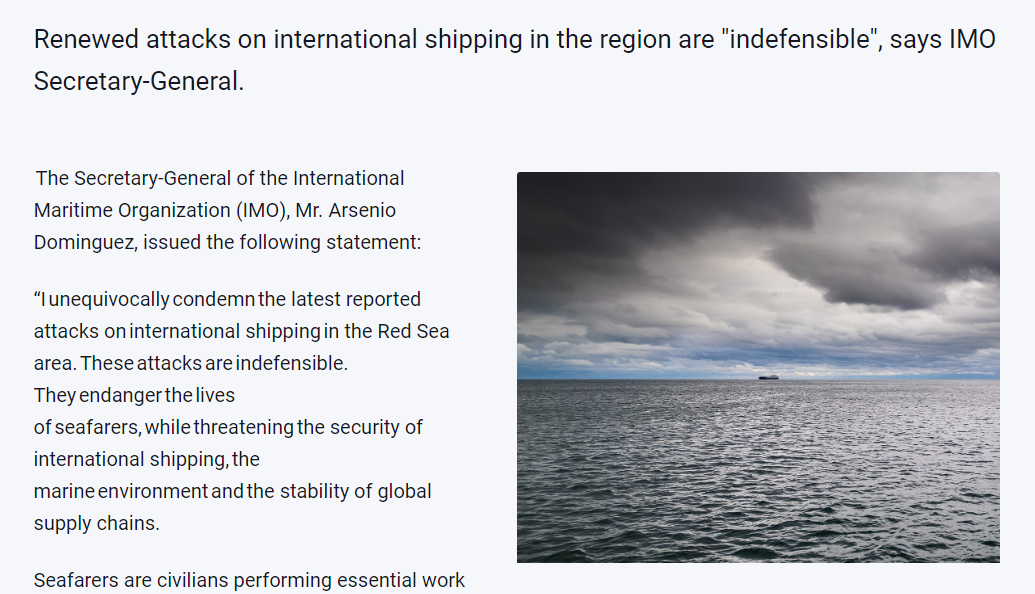
The escalating attacks are not only disrupting trade but also exacerbating a humanitarian crisis. According to UN data, approximately 6,000 seafarers remain stranded on vessels in the Strait of Hormuz. International Maritime Organization (IMO) Secretary-General Arsenio Dominguez this week "unequivocally condemned" the latest attacks on international shipping in the Red Sea and reiterated calls for the "immediate and unconditional release" of all seafarers detained as a result of pirate attacks. He had previously urged flag states, shipowners, and operators to "avoid exposing seafarers to unnecessary risk" when transiting the Strait of Hormuz.
Hot News