


Panama Canal Prepares for El Niño‑Induced Transit Restrictions
Source:
2026-07-28
Panama Canal Authority recently released its operating report for the first nine months of fiscal year 2026 (October 2025 to June 2026). The data show steady growth in both total transits and cargo tonnage, but due to a significant increase in the probability of an El Niño event, the Authority is preparing to implement its first operational restrictions in nearly two years to ensure long-term navigational safety and service reliability.
As of June 30, the Panama Canal recorded an average of 35 transits per day, with a cumulative total of 10,726 transits over the nine-month period, up 5.2% from 10,191 transits in the same period of fiscal year 2025. Cargo volume reached 389.96 million PC/UMS tons (Panama Canal Universal Measurement System tons), a year-on-year increase of 7.2%, compared with approximately 364 million PC/UMS tons in the same period last year.
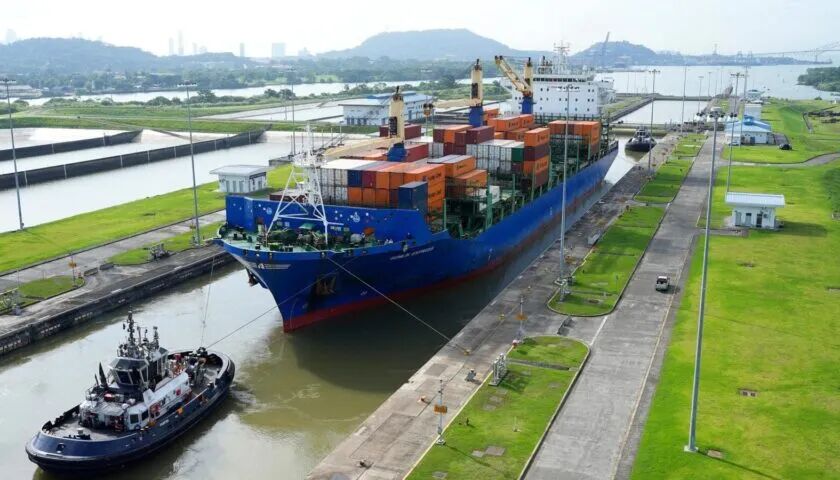
Dr. Ricaurte Vásquez Morales, Administrator of the Panama Canal Authority, noted that the growth was driven primarily by container ships and liquefied petroleum gas (LPG) carriers, reflecting sustained strong global trade demand for the Canal's capacity.
On the financial front, the Panama Canal recorded total revenue of USD 4.802 billion for the first nine months of the current fiscal year, a 17% year-on-year increase; net profit reached USD 3.614 billion, up 19% from the same period last year. Víctor Vial, Vice President of Finance, stated that robust revenue performance has further strengthened the balance sheet and provided solid support for upcoming major infrastructure investments. He also emphasized that market demand remains very strong.
Although recent hydrological conditions have been favorable (ample rainfall throughout 2025 and unusually heavy rain during the 2026 dry season, with reservoir levels consistently above normal), meteorological forecasts indicate that the probability of a severe El Niño event has risen sharply from 25% in April to 81% in July. Administrator Morales warned that the Panama Canal Authority "will very likely implement capacity restrictions, including not only draft limits but also a reduction in the number of daily reservation slots." The specific timing and scope will be adjusted dynamically based on market conditions.
This would mark the first time since mid‑2024 that the Panama Canal has introduced operational restrictions due to climate factors. The Authority is closely monitoring meteorological changes and has developed multi‑level contingency plans.
To fundamentally mitigate the impact of future droughts on Canal operations, the Panama Canal Authority is accelerating a number of long‑term infrastructure projects. At present, port terminal and pipeline projects have entered the final pre‑qualification phase; in parallel, progress continues on the Río Indio reservoir and the regional logistics corridor.
The Authority also emphasized that it will flexibly adjust its operational strategies as circumstances dictate, maintaining continued growth and service levels while ensuring safety and reliability.
Hot News